Vol. 1 No. 3 (2024): Integrated Knowledge for New Scientific Scenarios

					View Vol. 1 No. 3 (2024): Integrated Knowledge for New Scientific Scenarios
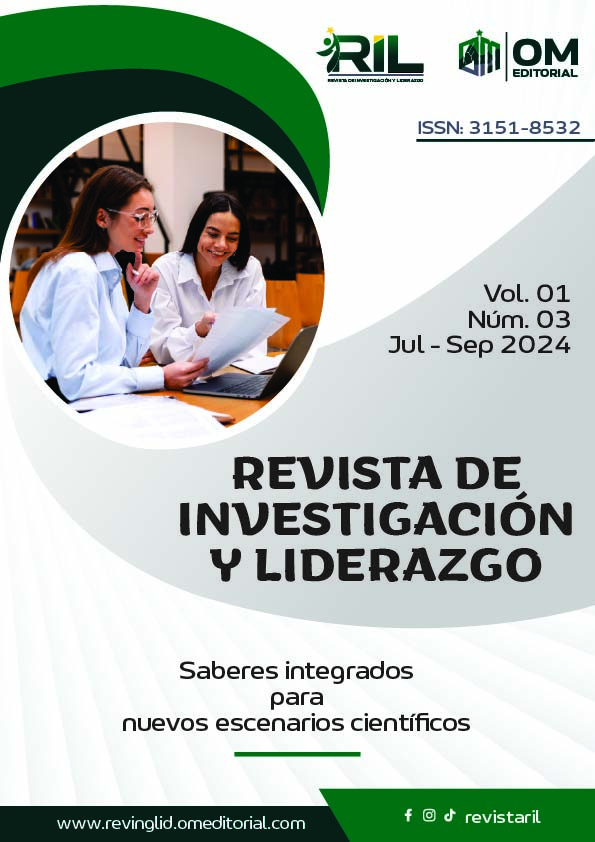
The integration of knowledge allows us to develop broader responses to scientific scenarios characterized by complexity, uncertainty, and constant change. Different disciplines provide conceptual, methodological, and practical tools that enrich our understanding of current phenomena. This integration facilitates the analysis of problems from multiple dimensions, incorporating social, technological, economic, educational, environmental, and cultural perspectives. In this way, knowledge becomes more relevant by linking academic reflection to the real needs of contemporary contexts and their processes of change.

Published: 2024-07-11

Artículos

  • Teachers' digital competencies in secondary education following the post-pandemic educational transformation

    Ángel Enrique Guerrero-Bermúde, Vilma Mireya Calero-Mieles, Yasiel Barban-Forte, José Daniel Zambrano-Molina (Author)
    1-17
    DOI: https://doi.org/10.63618/omd/revinvlid/v1/n3/16
  • Emerging technologies in long-duration energy storage for renewable energy systems.

    Juan Manuel Guerrero-Calero (Author)
    18-32
    DOI: https://doi.org/10.63618/omd/revinvlid/v1/n3/17
  • Disaster risk management and community adaptation to natural hazards

    Nefer Paulette Velasco-Holguin (Author)
    33-45
    DOI: https://doi.org/10.63618/omd/revinvlid/v1/n3/18
  • Animal welfare in intensive livestock production systems.

    Santiago Alexander Guamán-Rivera, Daniela Jaqueline Herrera-Sánchez (Author)
    46-60
    DOI: https://doi.org/10.63618/omd/revinvlid/v1/n3/19
  • Patient safety and quality of care in nursing practice.

    Priscila Jaqueline Herrera-Sánchez (Author)
    61-76
    DOI: https://doi.org/10.63618/omd/revinvlid/v1/n3/20